


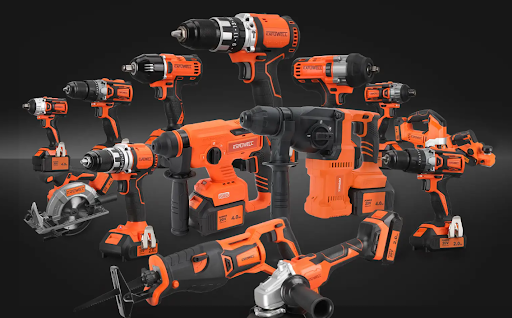
At wholesale level, the difference between DIY and industrial power tools is not a matter of branding or price positioning. It is a structural difference that affects durability, supply planning, warranty exposure, and long-term operating cost.
Buyers who treat DIY and industrial tools as interchangeable often discover the difference only after tools fail in real-world use. Understanding these differences upfront is critical when sourcing wholesale power tools.
Usage Intensity Defines the Category
The most fundamental difference lies in how the tools are used.
DIY power tools are designed for intermittent use. They are typically operated for short periods, with cooling time between tasks. Industrial power tools are built for continuous or near-continuous operation, often under load and in demanding environments.
At wholesale level, this distinction matters because usage intensity determines failure rate. A tool that performs well in occasional use may deteriorate quickly when used daily on a jobsite or in a workshop.
Internal Structure and Component Selection
The difference between DIY and industrial tools is not always visible from the outside. It is reflected in internal components.
Industrial tools usually feature heavier-duty motors, stronger gear systems, improved heat management, and higher-grade bearings. DIY tools often use lighter components optimized for cost and weight rather than long service life.
When sourced wholesale, these internal differences affect consistency across batches and long-term reliability.
Duty Cycle and Heat Management
Industrial tools are designed around higher duty cycles. They are expected to run longer without overheating or losing performance.
DIY tools often rely on user downtime to manage heat. Under industrial conditions, insufficient heat dissipation leads to accelerated wear or sudden failure.
Wholesale buyers supplying construction, fabrication, or rental markets must account for duty cycle limitations when selecting tools.
Tolerance for Environment and Handling
Industrial environments expose tools to dust, vibration, moisture, and rough handling. Industrial power tools are built to tolerate these conditions.
DIY tools generally assume cleaner environments and gentler handling. At wholesale scale, this difference affects warranty claims and after-sales costs.
Tools that cannot tolerate real jobsite conditions create hidden expenses that outweigh initial cost savings.
Maintenance and Repair Expectations
Industrial power tools are often designed with maintenance in mind. Components may be easier to service, and wear parts are expected to be replaced over time.
DIY tools are more likely to be treated as disposable. Repairs may be uneconomical or unsupported once failure occurs.
For wholesale buyers, this difference impacts after-sales strategy, spare parts planning, and customer satisfaction.
Cost Structure vs Lifetime Cost
DIY tools usually have lower upfront cost, which can appear attractive in wholesale purchasing. However, lifetime cost tells a different story.
Industrial tools typically cost more per unit but deliver longer service life, fewer failures, and more predictable performance. Over time, total cost of ownership is often lower in industrial use cases.
Wholesale buyers supplying professional users tend to prioritize lifetime cost over purchase price.
Warranty Exposure and Risk
DIY tools are generally sold with warranties designed for light use. When these tools are used in industrial settings, warranty claims increase and disputes become more common.
Industrial tools are designed with professional use assumptions, reducing warranty risk when used as intended.
Wholesale buyers must consider warranty exposure when selecting tools for different market segments.
Reorder and Product Lifecycle Considerations
DIY tools often follow faster product refresh cycles driven by consumer trends. Industrial tools usually have longer lifecycles to support consistent supply and replacement.
At wholesale level, frequent model changes complicate inventory planning and reorders. Industrial tools tend to offer more stability in long-term supply.
This stability is especially important for buyers supplying projects or long-term contracts.
Choosing the Right Tool for the Right Market
The key takeaway is not that one category is better than the other. The risk comes from mismatch.
DIY wholesale power tools are suitable for retail, light-duty applications, and price-sensitive markets. Industrial wholesale power tools are suited for construction, manufacturing, rental, and professional use.
Wholesale buyers who align tool category with actual usage conditions reduce failure rates, after-sales issues, and supply disruptions.
The Difference Becomes Clear at Scale
At small volumes, the difference between DIY and industrial tools may seem minor. At wholesale scale, it becomes unavoidable.
Higher usage intensity, repeat orders, and customer expectations expose weaknesses quickly. Buyers who understand these differences upfront make more conservative, reliable sourcing decisions and build more stable wholesale programs.
In wholesale power tools sourcing, category clarity is not a technical detail—it is a business necessity.
