


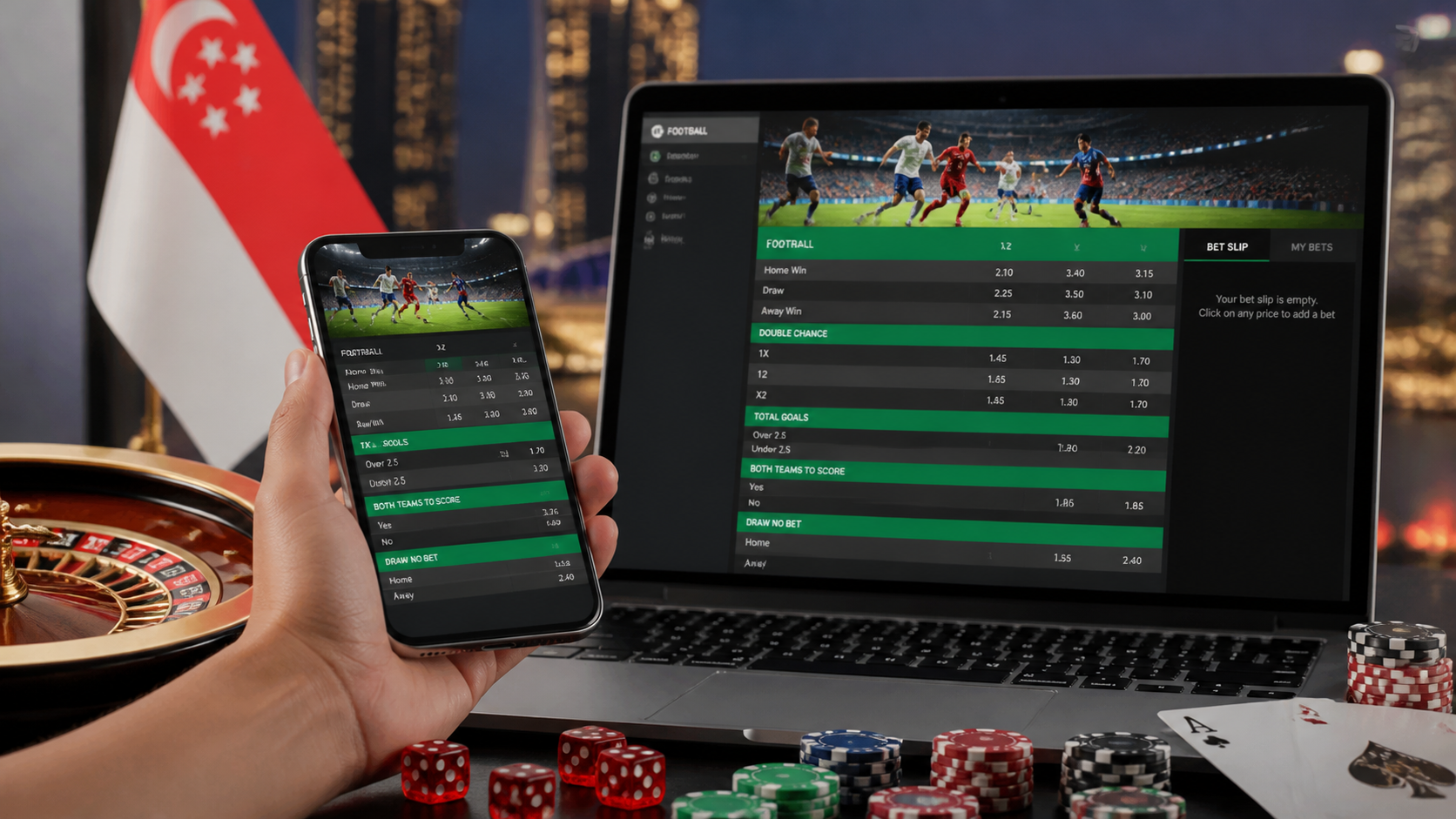
Choosing where to place a sports wager is about more than finding a flashy homepage or a large welcome offer. For readers in Singapore, the practical questions matter much more: how easy is the site to use, what sports can be followed, how clear are the betting markets, and whether the overall experience feels orderly and trustworthy. Those details shape the day-to-day reality of betting far more than marketing language does.
This is why the conversation around sports betting should focus on usability, transparency, and responsible play. A strong platform can help a user compare odds, track fixtures, and manage stakes without confusion. A weak one can create friction at every step. When people search for the best sports betting sites Singapore, they are usually looking for a balanced mix of convenience, selection, and clarity rather than hype.
What makes a sports betting site worth using
The first thing to assess is whether the site feels intuitive from the moment you arrive. A good betting platform should make it easy to find the sports you care about, understand the available markets, and place a bet without unnecessary clutter. If the layout is confusing, even experienced users can miss opportunities or make avoidable mistakes.
Clarity also matters because sports betting often moves quickly. Odds can shift, fixtures can start earlier than expected, and market availability may change during a match. A site that presents information in a clean way gives users a better chance of acting with confidence rather than rushing through a crowded interface. That does not guarantee better outcomes, but it can make the process easier to manage.
- Clear navigation across sports and leagues
- Readable odds presentation and market labels
- Fast access to live and upcoming events
- Simple bet slip handling
- Reasonable account and payment flow
It is also worth thinking about mobile use. Many people check matches and prices on a phone rather than a desktop, so the site should remain easy to read on a smaller screen. Buttons should be large enough to tap accurately, menus should not overwhelm the page, and key information should remain visible without endless scrolling.
Markets, odds, and the user experience
Different bettors focus on different parts of the experience. Some want broad coverage across football, tennis, basketball, or racing. Others prefer a smaller number of familiar markets where they can compare options quickly. Neither approach is automatically better. What matters is whether the site gives enough choice for the user’s habits without turning selection into a chore.
Odds presentation deserves close attention because the numbers shape every decision. A site may offer many betting lines, but if the layout makes them hard to compare, the apparent variety becomes less useful. The best platforms present odds in a way that supports fast reading, with clear labels and minimal ambiguity. That helps the user focus on the match and the price rather than decoding the page.
Pre-match and live betting
Some users prefer pre-match betting because it gives more time to study teams, form, injuries, and match context. Others are drawn to live betting, where the action continues after kick-off and the available markets can reflect what is happening on the field. A useful site should support both styles without making either one feel secondary.
Live betting, in particular, places a premium on speed and stability. If pages lag or markets refresh awkwardly, the experience becomes frustrating quickly. Even so, fast access should not replace careful judgment. Live markets can change rapidly, and users should avoid betting just because a game has become exciting. The platform can support decision-making, but it should not encourage impulse over thought.
Special markets and niche sports
Many bettors enjoy more than basic match-winner options. They may want totals, handicaps, player-based markets, or event-specific alternatives that fit a particular sport. Others may follow less mainstream competitions and want coverage that goes beyond the biggest leagues. A strong betting site tends to offer enough depth to satisfy both casual and more detailed interests.
That said, more markets are not always better. If a site buries the main options beneath a flood of secondary choices, the user experience may suffer. The ideal balance is breadth with structure: enough variety to be interesting, but not so much that the page becomes difficult to interpret.
Safety, payments, and account control
Any serious evaluation should include how the site handles money and account management. Users typically want deposits and withdrawals to be straightforward, and they want to know what information is required before they begin. A platform that explains its steps clearly will usually feel more dependable than one that leaves important details vague.
Payment flexibility can be helpful, but convenience should never come at the expense of control. A user should be able to review transactions, set personal limits where available, and understand how balances are tracked. These are practical details rather than decorative extras. They reduce confusion and help the experience remain organized over time.
- Check whether deposit and withdrawal steps are clearly explained
- Review how the site presents account balances and transaction history
- Look for straightforward verification requirements
- Prefer platforms that make it easy to manage limits and reminders
- Avoid sites that hide important rules behind dense text
Responsible play is part of this conversation as well. Sports betting should be treated as entertainment, not a source of income or a way to recover losses. The healthiest approach is to decide in advance how much time and money to spend, then stick to that plan. A site that supports this attitude through sensible account tools is generally more user-friendly than one that pushes constant action.
Comparing sites without getting lost in marketing
It is easy to be distracted by promotions, but the smarter approach is to compare the overall experience. An attractive offer may be worth considering, yet it should not be the only reason to choose a platform. The real test is whether the site stays useful after the novelty fades.
One practical way to compare options is to look at the same set of questions each time. That makes it easier to separate genuine quality from polished presentation. Instead of asking only which site looks exciting, ask which one makes everyday use easier and less stressful.
Questions to ask before signing up
- Is the sportsbook easy to navigate on mobile and desktop?
- Are the betting markets organized in a clear and logical way?
- Does the site make its rules and limits easy to understand?
- Are account and payment steps presented without unnecessary friction?
- Can the user manage activity in a controlled and responsible way?
It can also help to read the interface as if you were using it under time pressure. If you were checking a match during a break or before a game started, would you be able to locate the right market quickly? If the answer is no, that platform may not suit your habits even if it looks impressive at first glance.
Another useful filter is consistency. Some sites perform well on the homepage but become awkward once you move deeper into the betting slip or account area. A platform should feel coherent from start to finish. The more consistent the design and language, the easier it is to trust the experience.
Making a sensible choice for Singapore-based bettors
For bettors in Singapore, the most practical choice is rarely the loudest one. It is usually the site that combines a clean interface, understandable markets, reasonable account handling, and enough flexibility to match personal preferences. That combination matters because sports betting is not only about the picks you make; it is also about how comfortably you can make them.
If you are comparing platforms, focus on the details that affect everyday use. Look for a site that gives you room to think, rather than one that tries to push you into quick decisions. The best long-term experience usually comes from platforms that respect the user’s attention and support a measured approach. When the interface is clear and the rules are easy to follow, the entire process feels more manageable.
In the end, the right choice is the one that fits your habits and keeps the experience sensible. That may mean broad market coverage, or it may mean a smaller, cleaner setup that is easier to navigate. Either way, a careful comparison is better than relying on a headline promise. The more attention you give to structure, usability, and control, the easier it becomes to find a sportsbook that suits your needs.
